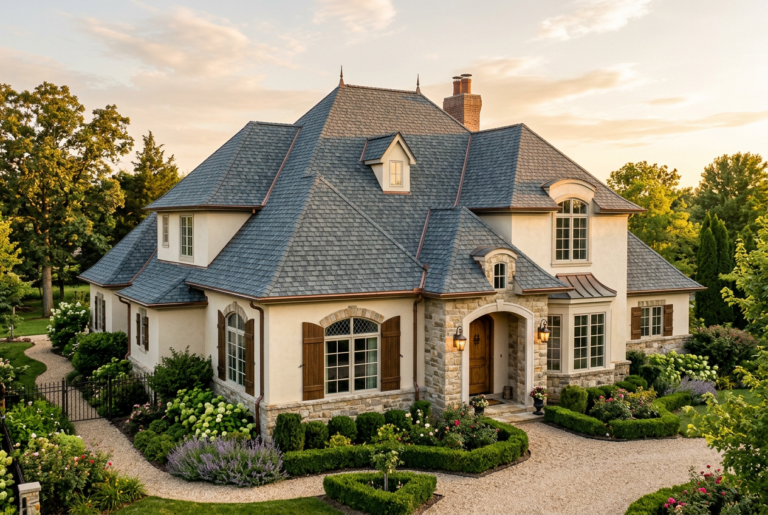
Do you own a historic home in St. Joseph, Missouri that needs roof restoration? Peak 2 Peak Roofing and Construction provides thoughtful, period-sensitive roof restoration and replacement for historic and architecturally significant properties throughout St. Joseph and all surrounding communities in northwest Missouri and northeast Kansas. We serve all of Buchanan County and reach Cameron, Savannah, Platte City, Weston, Lathrop, Smithville, Maryville, DeKalb, and Atchison, Kansas. St. Joseph’s remarkable collection of Victorian, Italianate, Queen Anne, and Craftsman properties deserve roofing that respects their architectural character — and we bring both technical expertise and historical sensitivity to every project.
St. Joseph is home to one of the finest collections of late-nineteenth and early-twentieth century architecture in Missouri. The neighborhoods surrounding Robidoux Hill, the Friedrich District, the Krug Park area, and the historic commercial districts near the Missouri River represent decades of architectural investment by the merchants, entrepreneurs, and civic leaders who built St. Joseph into a regional commercial center. The Pony Express Museum, the Jesse James House Museum, the Patee House, and hundreds of privately owned Victorian and Craftsman homes throughout the city represent this heritage. Restoring a roof on one of these properties is not simply a roofing project — it is a stewardship decision that affects the property’s long-term character, value, and historical integrity.
The roofing challenges of historic St. Joseph homes are real and specific. Steep pitch profiles require specialized access equipment. Complex rooflines with multiple valleys, dormers, turrets, and intersecting planes demand skilled flashing work at every transition. Original roofing materials — natural slate, clay tile, cedar shake, and sometimes copper — have specific performance characteristics and aesthetic qualities that modern replacement materials must address thoughtfully. And many historic properties have attic insulation and ventilation systems that were designed for a different era and must be sensitively upgraded to prevent the ice dam and moisture damage that inadequate modern ventilation produces.
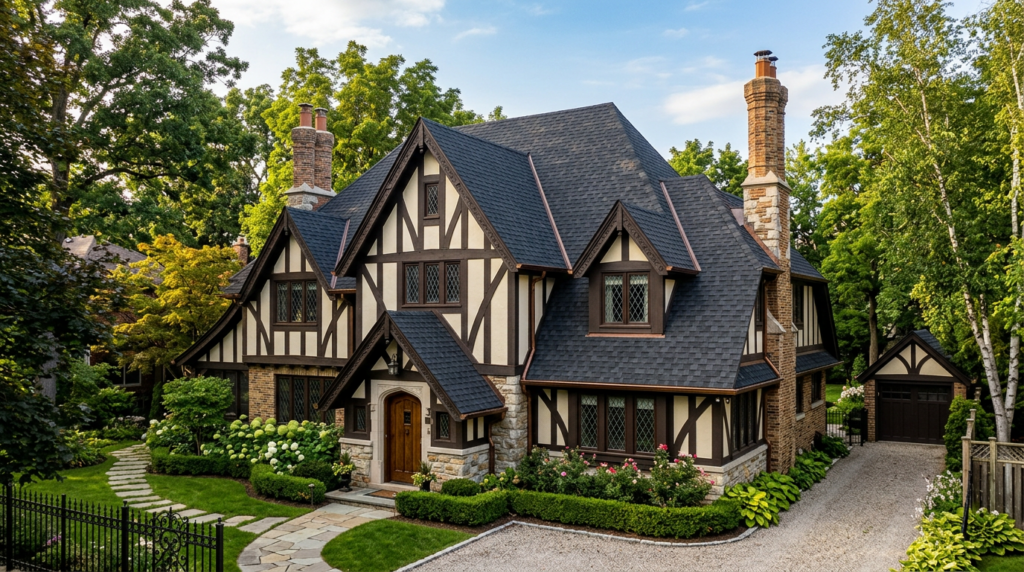
Understanding Historic Roofing Materials
The original roofing materials found on St. Joseph’s historic properties each have specific characteristics that inform restoration decisions:
- Natural slate — The most durable original material found on St. Joseph’s finest Victorian properties. Natural slate that was properly installed can last 100 years or more. When an original slate roof begins to fail — through broken slates, failing fasteners, or deteriorated flashings — the choice between selective repair of the slate system versus full replacement with a modern alternative involves careful assessment of the remaining slate’s condition, the cost of matching replacement slate, and the property owner’s long-term goals for the property. We evaluate every slate situation carefully before making recommendations.
- Clay tile — Found on Spanish Colonial, Mediterranean, and some Victorian Revival properties. Clay tile shares slate’s durability when sound but requires careful handling during repair. Replacement tiles for older profiles can be difficult to source, making condition assessment of surviving tile essential before determining repair versus replacement strategy.
- Cedar shake and shingle — Original cedar shake is found on many St. Joseph Craftsman and Victorian properties. Natural cedar deteriorates over time and requires periodic maintenance. When replacement is warranted, modern composite shake products — engineered to replicate the dimensional appearance of natural cedar with Class A fire resistance and 40 to 50-year service life — are an excellent choice that preserves the architectural character of the original installation without the maintenance demands of natural wood.
- Standing seam metal — Original standing seam metal roofing is found on many of St. Joseph’s commercial buildings and some high-quality residential properties. A well-maintained original standing seam system may simply need flashing repairs and sealant maintenance. When replacement is needed, modern standing seam metal in Galvalume or Kynar-coated steel replicates the original system’s profile and provides 40 to 70 years of service life in historically appropriate colors.
Modern Materials That Respect Historic Character
For most historic St. Joseph properties, the most practical restoration approach uses modern materials selected to match the character of the original without recreating its maintenance challenges. The key principle is that replacement materials should be visually compatible with the historic property and perform at a level that protects the structure for the next generation of owners. Materials we commonly specify for historic St. Joseph properties include:
- Dimensional architectural shingles in historically appropriate colors — For Craftsman, Colonial, and simpler Victorian properties, premium architectural shingles in charcoal, weathered wood, aged cedar, and similar earth tones provide the dimensional depth and color variation that complements the original character of these homes. Colors like GAF’s Barkwood and Hickory or Owens Corning’s Aged Cedar and Estate Gray are chosen specifically for their compatibility with historic exteriors.
- Composite shake — For properties where a cedar shake profile is part of the architectural identity, engineered composite shake delivers the dimensional shadow lines of natural wood shake with Class A fire resistance and multi-decade service life. These products are accepted by most historic district guidelines when natural cedar replacement is impractical.
- Standing seam metal in historic profiles — For properties where metal roofing is original or architecturally expected, modern standing seam systems in narrow-rib profiles at 12 to 16 inch seam spacing replicate the visual character of historic standing seam installation in dark bronze, charcoal, or slate color options.
📞 Schedule Your Historic Roof Consultation: (816) 752-4589
Flashing and Detail Work on Historic Properties
The quality of flashing and detail work on a historic property is what separates a restoration from a replacement. Every chimney surround, every dormer transition, every valley line, every wall intersection, and every penetration on a complex historic roofline is an opportunity for either a properly executed, period-sensitive installation or a compromised shortcut that looks wrong and fails early.
We treat the detail work on historic properties with the same care as the field installation — because on a Victorian property with seven roof planes, three dormers, and two chimneys, the details are the majority of the work. Step flashing and counter flashing at every chimney is installed and mortared per the correct methodology. Valley flashing is sized for the water volume the steep pitch delivers. Dormer intersections receive custom-formed flashing profiles that follow the original architectural geometry. Nothing is caulked over in lieu of proper flashing — because caulk fails in three to five years and proper flashing should outlast the roofing material above it.
Working Within Historic District Guidelines
Some St. Joseph historic properties are located in areas covered by local historic preservation guidelines that may specify requirements for roofing material types, colors, or profiles. If your property is subject to historic district review, we work within those guidelines and can provide documentation of material specifications for review submissions. We recommend confirming any applicable historic district requirements with the City of St. Joseph or your neighborhood preservation organization before finalizing material selections. See our complete roofing services for St. Joseph.
Frequently Asked Questions: Historic Home Roof Restoration in St. Joseph
Should I repair or replace the original slate on my St. Joseph historic home?
It depends on the remaining slate’s condition. Sound slate with failing individual pieces can often be repaired by replacing broken slates and re-flashing — extending the system decades at reasonable cost. When the majority of slates are spalling or fasteners are broadly failing, replacement with a modern alternative becomes more economical. We provide an honest condition assessment before recommending a path.
What modern materials are appropriate for historic homes?
Composite shake for original cedar profiles. Standing seam metal in narrow rib profiles for original metal installations. Premium dimensional architectural shingles in historically compatible colors for simpler Victorian and Craftsman properties. We discuss the options most compatible with your property during the free consultation.
Does Peak 2 Peak have experience with historic St. Joseph properties?
Yes. We regularly work on the complex steep-pitch rooflines of St. Joseph’s Victorian, Craftsman, and Italianate properties with proper fall protection systems and staging. Our inspectors understand the specific failure modes and restoration needs of older roofing systems.
When is selective restoration appropriate versus full replacement?
Restoration is appropriate when existing material has sufficient remaining life in most areas and targeted repair addresses specific failure points. Full replacement makes sense when deterioration is widespread, flashings have failed comprehensively, or repair costs approach replacement costs without delivering a new system’s service life.
Do historic district guidelines affect my roofing choices?
Possibly, depending on your property’s location. We recommend confirming any applicable requirements with the City of St. Joseph before finalizing selections. We provide material specification documentation for any required review submissions.
Historic Home Roofing Resources
- National Park Service – Preservation Brief 45: Slate Roofs – Federal guidance on the preservation, repair, and replacement of historic slate roofing on significant properties.
- National Park Service – Preservation Brief 4: Historic Roofing – Comprehensive guidance on evaluating historic roofing materials and selecting appropriate replacement alternatives.
- City of St. Joseph – Planning and Development – Local resource for historic district guidelines and review requirements affecting St. Joseph properties.
- Wikipedia: Victorian Architecture – Background on the Victorian architectural styles prevalent in St. Joseph’s historic neighborhoods.
Key Takeaways
- St. Joseph’s remarkable Victorian, Craftsman, and Italianate properties deserve roofing restoration that respects their architectural character — not generic replacement that ignores the property’s historical significance.
- Modern composite shake, standing seam metal, and premium architectural shingles in historically compatible profiles and colors provide excellent restoration options for most historic property types.
- Flashing and detail work quality is what separates a true restoration from a simple replacement on complex historic rooflines — we invest in correct installation at every transition.
- Peak 2 Peak provides free consultations and honest condition assessments for historic St. Joseph properties throughout our full service area.
- Confirm any historic district guidelines with the City of St. Joseph before finalizing material selections — we provide specification documentation for required review submissions.
St. Joseph’s historic homes are irreplaceable. The roofing decisions made on these properties today affect their character for the next generation of owners. Call Peak 2 Peak Roofing today for a consultation that takes your historic property’s character as seriously as its weather protection.
Peak 2 Peak Roofing and Construction
7000 MO-371
St. Joseph, MO 64504
Phone: (816) 752-4589
Email: [email protected]
Website: www.peak2peakroofing.com
View Our Google Business Profile