Do you need a chimney cap replaced in St. Joseph, Missouri? Peak 2 Peak Roofing and Construction provides chimney cap inspection, repair, and replacement throughout St. Joseph and all surrounding communities in northwest Missouri and northeast Kansas. We serve all of Buchanan County and reach Cameron, Savannah, Platte City, Weston, Lathrop, Smithville, Maryville, DeKalb, King City, Gower, and Atchison, Kansas. A missing or damaged chimney cap is one of the simplest problems to fix and one of the most damaging to ignore — and we can address it quickly during any roofing visit throughout our service area.
The chimney cap is the metal cover installed over the flue opening at the top of your chimney. It sits above the chimney crown — the concrete or mortar surface that forms the top of the chimney masonry structure — and directly covers the flue opening where combustion gases exit the chimney. This small component performs several critical functions: it keeps rain from falling directly into the flue; it prevents animals from entering and nesting in the flue; it acts as a spark arrestor that stops burning embers from exiting the flue and landing on the roof or landscaping; and it helps prevent downdrafts that push cold air back down the flue and into the firebox. When the cap is missing, damaged, or rusted through, every one of these functions is lost simultaneously.
St. Joseph’s climate creates specific chimney cap challenges. Northwest Missouri’s severe storm seasons deliver hail that dents and damages standard galvanized steel caps. High winds can physically displace caps that are improperly sized or inadequately secured. The freeze-thaw cycling of Missouri winters causes galvanized steel caps to rust at an accelerated rate compared to caps in milder climates. And the mature trees throughout St. Joseph’s established neighborhoods deposit debris on chimney caps that increases corrosion and moisture retention. A galvanized steel chimney cap on a St. Joseph home typically needs inspection every three to five years and replacement every 10 to 15 years depending on the severity of weather exposure at the specific property.
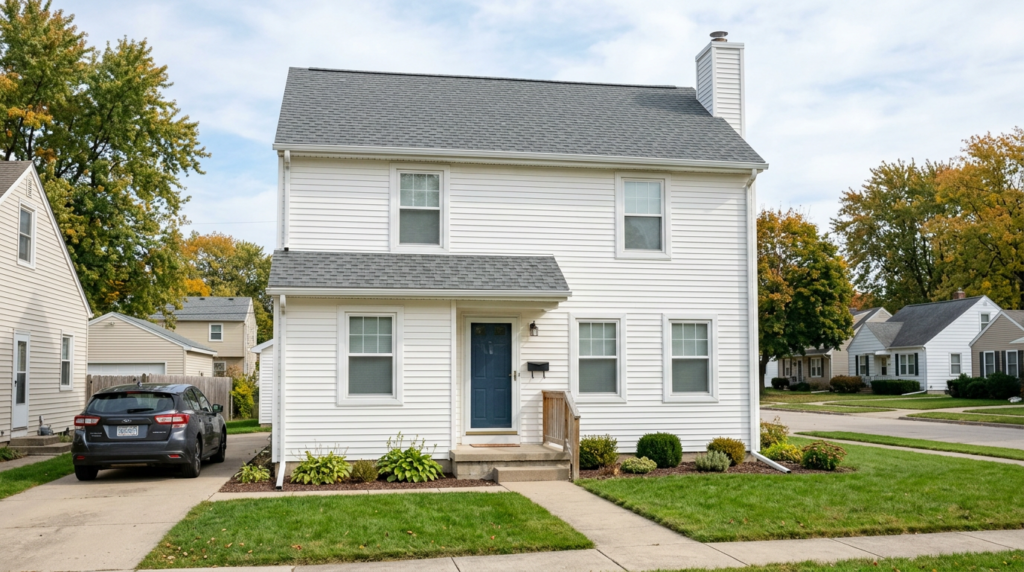
What a Chimney Cap Does: Four Critical Functions
- Rain exclusion — Rainwater falling directly into an open flue immediately contacts the firebox, damaging the firebox floor, the damper assembly, and the interior masonry. Over time, this direct water exposure deteriorates the mortar and masonry inside the flue, creating structural and draft performance issues. A properly fitted cap prevents any direct rain entry into the flue opening.
- Animal exclusion — An open flue is an attractive nesting site for birds, squirrels, raccoons, and bats. Animal nests in flues create fire hazards from the nesting material and can block combustion gases from exiting, creating carbon monoxide risk for occupants. A chimney cap with appropriately sized mesh screens prevents animal entry while maintaining adequate draft airflow.
- Spark arrestor function — During wood-burning fireplace use, burning embers travel up the flue. Without a mesh cap, these embers can exit the flue opening and land on the roof surface or surrounding landscaping, creating potential fire hazards. A chimney cap with metal mesh screens at the sides catches these embers while allowing combustion gases to exit freely.
- Downdraft reduction — Wind flowing over an uncapped chimney can create downdraft conditions that push cold outdoor air back down the flue and into the firebox. A properly designed chimney cap with flanged sides helps deflect this wind loading and reduce downdraft occurrences — improving both draft performance and comfort during fireside use.
Signs Your Chimney Cap Needs Replacement in St. Joseph
- Visible rust or corrosion on the cap visible from the ground — galvanized steel caps that have lost their protective coating rust through progressively and eventually fail to exclude rain and animals
- Water in the firebox after rain events — direct evidence that rain is entering the flue without obstruction
- Animal sounds, nesting material in the firebox, or birds entering the flue — confirmed animal entry indicating that cap mesh is damaged, missing, or the cap is absent entirely
- Hail denting severe enough to collapse the cap mesh inward — this restricts flue airflow and creates draft problems during fireplace use
- Cap physically displaced from the chimney crown after a high-wind event — visible from the ground as a cap sitting crooked, partially off, or missing from its original location
- Smoky firebox during use — while multiple factors can cause this, a damaged or missing cap that disrupts draft is one of the causes
📞 Schedule Your Chimney Cap Service: (816) 752-4589
Chimney Cap Materials: Which Is Right for Your St. Joseph Home?
- Galvanized steel — The standard and most widely installed cap material. Factory galvanized coating provides corrosion resistance for 10 to 15 years in St. Joseph’s climate before rusting through. Most cost-effective initial option. We specify heavy-gauge galvanized caps that provide better resistance to hail denting than light-gauge alternatives.
- Stainless steel — The preferred upgrade for St. Joseph properties. Stainless steel caps do not rust — they maintain their corrosion resistance for the life of the chimney. The higher initial cost pays back within the first replacement cycle that is avoided. For St. Joseph homes where chimney cap replacement has been a recurring maintenance item, stainless steel is the correct long-term investment.
- Copper — Premium material that develops a distinctive patina over time and provides exceptional longevity. Appropriate for historic St. Joseph properties where the architectural character of the chimney cap is a consideration. Significantly higher material cost than steel options but essentially lifetime service life when properly installed.
Chimney Cap Sizing and Selection
Chimney cap sizing is not one-size-fits-all. A correctly fitted cap must match the dimensions of your specific flue opening — typically a single-flue or multi-flue configuration — and the outside dimensions of your chimney crown. A cap that is too small does not fully cover the flue opening. A cap that is too large sits unstably on the crown and can be displaced by wind. We measure your specific flue and crown dimensions during the chimney assessment and select or fabricate a cap that fits correctly and seats securely.
Multi-flue chimneys — where two or more separate flues are present within the same chimney structure — require either individual caps for each flue or a custom multi-flue cap that covers the full crown with appropriate screening for each flue opening. We assess the specific configuration of your chimney during the inspection and recommend the correct cap configuration for your property.
Chimney Crown Assessment During Cap Replacement
When we access the chimney to replace the cap, we also assess the condition of the chimney crown — the concrete or mortar surface at the top of the masonry below the cap. Cracked or deteriorating chimney crowns allow water to infiltrate the masonry regardless of the cap condition above. A new cap installed over a failing crown will not prevent all water entry into the chimney system. We identify any crown issues during the cap replacement visit and provide a written estimate for crown repair or resurfacing if needed. See our complete roofing and exterior services for St. Joseph.
Frequently Asked Questions: Chimney Cap Replacement in St. Joseph
How long does a chimney cap last in St. Joseph?
Standard galvanized steel caps typically last 10 to 15 years before rust compromises their effectiveness. Stainless steel provides essentially indefinite corrosion resistance. Copper is premium with exceptional longevity appropriate for historic properties.
What happens if I don’t replace a damaged chimney cap?
Rain enters the flue directly, accelerating interior masonry deterioration. Animals nest in the flue, creating fire hazards. The spark arrestor function is lost during fireplace use. Downdraft performance worsens. All entirely preventable with a correctly fitted cap.
How do I know if my chimney cap has been displaced by wind?
Sometimes visible from the ground as sitting crooked or absent. Other signs include water in the firebox after rain, birds entering the flue, or nesting material in the firebox. Call (816) 752-4589 if you suspect displacement after a wind event.
Should I upgrade to stainless steel?
For most St. Joseph properties, yes. Stainless steel does not rust — eliminating the recurring replacement cycle that galvanized caps require in our climate. Total cost over the chimney’s life is typically lower with stainless even at the higher initial price.
Does Peak 2 Peak replace chimney caps throughout St. Joseph?
Yes — inspection, sizing, and replacement throughout St. Joseph and all surrounding northwest Missouri and northeast Kansas communities. We also assess chimney crown condition during every cap replacement visit. Call (816) 752-4589 to schedule.
Chimney Cap Resources
- Chimney Safety Institute of America (CSIA) – Professional standards and consumer guidance on chimney cap requirements, sizing, and maintenance for fireplace safety.
- NFPA 211 – Standard for Chimneys, Fireplaces, Vents – National fire protection standard that includes chimney cap requirements for residential and commercial applications.
- Wikipedia: Chimney – Background on chimney construction, components including caps and crowns, and the functional role of chimney caps in draft and moisture management.
- National Roofing Contractors Association (NRCA) – Professional standards for chimney cap installation and chimney-to-roof interface maintenance.
Key Takeaways
- A chimney cap performs four critical functions simultaneously: rain exclusion, animal exclusion, spark arrestor protection, and downdraft reduction — all lost when the cap is missing or failed.
- St. Joseph’s severe storms, freeze-thaw cycling, and mature tree canopy create more demanding conditions for chimney caps than milder climates, making inspection every three to five years appropriate.
- Stainless steel is the preferred upgrade for most St. Joseph properties — eliminating the recurring rust-and-replace cycle that galvanized steel creates in our climate.
- Peak 2 Peak assesses chimney crown condition during every cap replacement visit — identifying any masonry issues that would allow water entry despite the new cap above.
- Chimney cap replacement is among the most cost-effective roofing maintenance investments available — small cost, significant protection against moisture damage, animal infestation, and fire hazard.
A properly fitted chimney cap is one of the simplest protections your St. Joseph home can have — and one of the most damaging to be without. Call Peak 2 Peak Roofing today for a quick chimney cap assessment and replacement if needed.
Peak 2 Peak Roofing and Construction
7000 MO-371
St. Joseph, MO 64504
Phone: (816) 752-4589
Email: [email protected]
Website: www.peak2peakroofing.com
View Our Google Business Profile