Do you need a roof inspection checklist for your St. Joseph, Missouri home? You are in the right place. Peak 2 Peak Roofing and Construction serves St. Joseph and all nearby communities with free professional roof inspections. Our NRCA-certified inspectors arrive on time, assess every section of your roof, and give you a clear, honest report. We cover all of Buchanan County and beyond, reaching communities like Cameron, Savannah, Platte City, Lathrop, Smithville, and Weston. Whether you schedule a routine annual inspection or need an urgent post-storm assessment, we are available 24 hours a day, 7 days a week.
Regular roof inspections are one of the most cost-effective things a homeowner can do. The National Roofing Contractors Association recommends having your roof professionally inspected at least once per year, and after any significant storm event. Missouri’s climate makes this advice especially important in St. Joseph. Our area sees hot, humid summers that degrade roofing materials, icy winters that create ice dam risks, and severe spring and fall storms that drop large hail and bring wind gusts over 60 miles per hour. A roof that looks fine from the street today can have hidden vulnerabilities that turn into a ceiling leak six months from now.
This checklist covers every major area our certified inspectors examine during a professional assessment. Use it as a reference to understand what is involved in a thorough roof evaluation. However, we always recommend having a licensed professional perform the actual inspection. Roof surfaces are dangerous, and trained eyes catch things that homeowners regularly miss from the ground or during a casual visual check.
Exterior Roof Surface: Shingles and Roofing Material
The roofing surface is the first and most visible component of your roof system. Here is what our inspectors check:
- • Missing shingles – Any gap in the roofing surface exposes the underlayment and decking below. Even one or two missing shingles can admit water during the next rain.
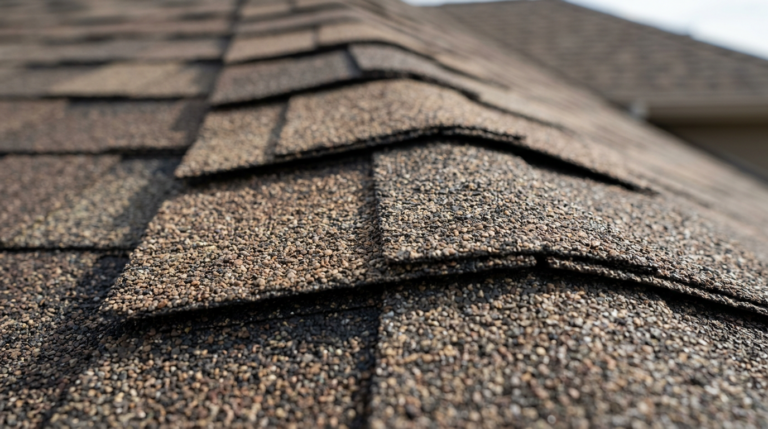
- • Curling or cupping shingles – Shingles that curl up at the edges (cupping) or curl down in the middle (clawing) indicate aging, heat damage, or poor ventilation. These shingles are no longer sealing properly.
- • Cracked or split shingles – Cracks break the watertight integrity of the shingle. Common after temperature extremes or hail impact.
- • Excessive granule loss – Granules protect asphalt shingles from UV rays. When they wash off, bald spots appear. Heavy granule accumulation in gutters signals a roof nearing end of life.
- • Blistering or bubbling – Blisters form when moisture or volatile compounds are trapped in the shingle during manufacturing or installation. They can eventually rupture and expose the mat below.
- • Hail impact marks – Look for circular dark spots where granules have been knocked away. On a hail-damaged roof, these appear in a random pattern across each slope.
- • Staining or discoloration – Black streaks indicate algae growth (Gloeocapsa magma). Green patches indicate moss. Both retain moisture against the shingle surface and accelerate deterioration.
Flashing: The Most Common Source of Roof Leaks
Flashing is the metal or rubberized material that seals the joints where your roof meets vertical surfaces. It is the most common source of roof leaks in St. Joseph homes. Our inspectors check every flashing location carefully:
- • Chimney flashing – Step flashing and counter flashing around the chimney base must be intact, properly overlapping, and sealed. Separated or corroded chimney flashing is a top cause of interior leaks.
- • Pipe boot flashing – Rubber gaskets at the base of plumbing vents degrade over time. A cracked or torn boot admits water directly into the decking.
- • Roof valley flashing – Valleys channel water off the roof. Damaged valley flashing leads to water concentration in vulnerable seams.
- • Skylight flashing – Skylights require step and counter flashing on all four sides. Even small separations lead to consistent leaks.
- • Drip edge flashing – Drip edge at the eaves and rakes prevents wind-driven rain from entering the gap between the deck and fascia. Missing drip edge causes wood rot in the fascia board.
- • Wall-to-roof flashing – Where a roof meets a vertical wall (such as a dormer or addition), step flashing must be correctly interwoven with the siding above.
Gutters and Drainage: The Overlooked System
Gutters are part of your roof system. Failing gutters cause water to back up under the roofing edge, damage fascia boards, and saturate the soil around your foundation. We check the following during every inspection:
- • Gutter attachment – Gutters should be firmly secured to the fascia with no sagging sections. Sagging gutters collect standing water and overflow.
- • Debris accumulation – Leaves, twigs, and seed pods clog gutters and downspouts, causing backup and overflow. St. Joseph’s tree-lined neighborhoods make this a common issue.
- • Granule buildup – Heavy granule accumulation in gutters is a direct indicator of shingle deterioration on the roof above.
- • Downspout discharge – Downspouts should direct water at least six feet away from the foundation. Improper discharge saturates the soil and can cause basement moisture intrusion.
- • Gutter slope and alignment – Gutters must slope toward downspouts at a consistent pitch. Flat or reverse-sloped sections accumulate standing water year-round.
If your gutters need attention, our seamless gutter installation service offers 5-inch and 6-inch K-style aluminum gutters that integrate with your new or existing roof system.📞 Schedule Your Free Inspection: (816) 269-7874
Roof Structure: Checking for Underlying Problems
Structural issues in the roof deck, rafters, or ridge line often develop quietly. They are not visible from the outside until the problem is advanced. Our inspectors look for:
- • Sagging or uneven rooflines – A sagging ridge or uneven roof surface indicates decking failure, rafter damage, or long-term moisture intrusion. This is a serious structural concern.
- • Soft spots in the deck – When we walk the roof, areas that feel soft or spongy indicate rot in the plywood or OSB decking below. These must be replaced before any new roofing material is installed.
- • Damaged fascia and soffit – Rotted or deteriorating fascia and soffit boards affect the structural integrity of the roof edge and allow pest entry into the attic.
Attic Inspection: The Inside Story of Your Roof’s Health
A roof inspection is not complete without checking the attic. Our certified inspectors assess:
- • Ventilation – Proper attic ventilation regulates temperature and moisture. Blocked soffit vents, clogged ridge vents, or insufficient vent area causes heat and humidity buildup that degrades roofing materials from the inside. In St. Joseph winters, poor ventilation directly causes ice dams.
- • Water stains and moisture – Dark staining on rafters, sheathing, or insulation indicates active or past water infiltration. We trace these stains to their source to identify the specific leak point.
- • Mold and mildew – Mold in the attic is a sign of either a roof leak or persistent condensation from inadequate ventilation. Both require immediate attention.
- • Light penetration – With attic lights off during a daylight inspection, any visible light coming through the roof deck confirms holes or gaps that need to be sealed.
- • Insulation condition – Saturated insulation loses its thermal value and contributes to ongoing moisture problems. Inspecting insulation condition is part of a thorough attic assessment.
Roof Penetrations and Accessories
Every object that punctures the roof surface is a potential leak point. We inspect each one:
- • Plumbing vent boots and pipe collars for cracks or separation
- • Attic ventilation fans, ridge vents, and power vents for proper sealing and function
- • Satellite dish mounts and antenna penetrations for proper sealing
- • HVAC curb mounts on commercial roofs for flashing integrity
- • Chimney caps and crown for cracking that allows water infiltration into the flue
How Often Should St. Joseph Homeowners Get Their Roof Inspected?
At minimum, twice per year — once in spring after winter weather, and once in fall before the cold season begins. In addition, we recommend a professional inspection after any significant storm event. Northwest Missouri sees multiple severe weather episodes each year. Hail damage, in particular, is invisible from the ground and can be missed entirely until it becomes a leak. Scheduling an inspection promptly after a major storm is always worth it.
Roofs over 15 years old should be inspected annually without exception. As roofing systems approach the end of their designed lifespan, deterioration accelerates. Early identification of replacement need lets you plan financially rather than react to an emergency.
Our professional roof inspection and repair service is free for routine assessments. For formal written reports needed for real estate transactions, refinancing, or property management documentation, our $175 written roof inspection report provides a comprehensive PDF document with photos, notes, and professional findings.
Frequently Asked Questions: Roof Inspection in St. Joseph, MO
How often should I get my roof inspected in St. Joseph, Missouri?
We recommend professional roof inspections at least twice per year — spring and fall — plus after any significant storm. Roofs over 15 years old should be inspected annually. Northwest Missouri’s severe weather patterns make regular professional inspection especially important for protecting your home.
Can I inspect my roof myself?
Homeowners can do a basic visual check from the ground using binoculars. However, a thorough inspection requires safe roof and attic access, knowledge of what to look for, and documentation. Professional inspectors catch issues homeowners regularly miss, especially hail bruising and hidden flashing failures.
What is included in a Peak 2 Peak free roof inspection?
Our free inspection covers the full exterior roof surface, all flashing points, gutters and drainage, visible structural components, and an attic assessment. We document everything with photos and provide an honest, detailed summary of our findings at no charge.
What does a professional written roof inspection report cost?
Our professional written roof inspection report is $175. It includes a full exterior assessment, detailed photo documentation, and a PDF report delivered within one to two business days. It is used for real estate transactions, refinancing, and property management requirements.
Do I need a roof inspection after a hailstorm in St. Joseph?
Yes, absolutely. Hail damage to asphalt shingles is not visible from the ground. Impact bruises that strip granules and crack the underlying mat can only be identified through a close-up inspection. Call us after any hail event for a free post-storm assessment.
Roof Inspection Resources
- • National Roofing Contractors Association (NRCA) – Industry standards and consumer guidance for professional roof inspections.
- • National Roof Certification and Inspection Association (NRCIA) – Certification standards and inspection resources for professional roof inspectors.
- • Wikipedia: Roof Inspection – Overview of roof inspection processes, standards, and best practices.
- • IKO Roofing: Roof Inspection Checklist – Manufacturer-published guidance on what a thorough shingle roof inspection covers.
Key Takeaways
- • St. Joseph homeowners should get a professional roof inspection at least twice per year and after every major storm.
- • A complete inspection covers shingles, flashing, gutters, structure, attic, and roof penetrations.
- • Flashing failures and hail damage are the most commonly missed issues during casual ground-level checks.
- • Peak 2 Peak offers free professional roof inspections throughout St. Joseph and surrounding areas.
- • A $175 written inspection report is available for real estate, refinancing, and documentation needs.
Staying ahead of roof problems is far less expensive than reacting to them after the fact. Schedule your free professional roof inspection with Peak 2 Peak today. Our certified team covers every inch of your roof and gives you a clear, honest picture of exactly where things stand.
Peak 2 Peak Roofing and Construction
7000 MO-371
St. Joseph, MO 64504
Phone: (816) 269-7874
Email: [email protected]
Website: www.peak2peakroofing.com
View Our Google Business Profile