Do you have ice dams forming on your roof in St. Joseph, Missouri? Peak 2 Peak Roofing and Construction helps homeowners throughout St. Joseph and all surrounding communities in northwest Missouri understand, address, and prevent ice dam damage. We are available 24 hours a day, 7 days a week during winter emergencies when ice dam water infiltration is active inside your home. We cover all of Buchanan County and serve Cameron, Savannah, Platte City, Weston, Lathrop, Smithville, Maryville, DeKalb, and Atchison, Kansas. When winter damage strikes your roof, we respond fast and give you honest guidance on both the immediate problem and the underlying cause.
Ice dams are one of the most misunderstood winter roof problems St. Joseph homeowners face. Many people assume ice dams happen because of cold temperatures alone. In reality, ice dams are primarily an attic problem, not a weather problem. As the University of Missouri Extension explains, warm air leaking from living spaces into an unheated attic heats the roof deck above the insulated area. Snow on that warmer central section melts and runs toward the eave. At the eave — which stays cold because there is no living space heat below it — the meltwater refreezes. As this cycle repeats, a ridge of ice builds up at the eave edge, backing water up under the shingles above the ice line. That water infiltrates the underlayment, the decking, and eventually the interior of the home. Missouri’s 30 to 50 freeze-thaw cycles per winter make this a serious and recurring risk in northwest Missouri.
St. Joseph’s older neighborhoods — where Victorian and Craftsman homes near Robidoux Hill and along the Frederick Avenue corridor may have inadequate attic insulation and ventilation by modern standards — face particular ice dam risk during severe winter weather. The combination of an older, less airtight building envelope and insufficient attic thermal separation creates exactly the conditions ice dams require: a warm central roof surface and a cold eave edge. Understanding this helps St. Joseph homeowners see why simply chipping ice or clearing snow is a temporary measure, not a solution.
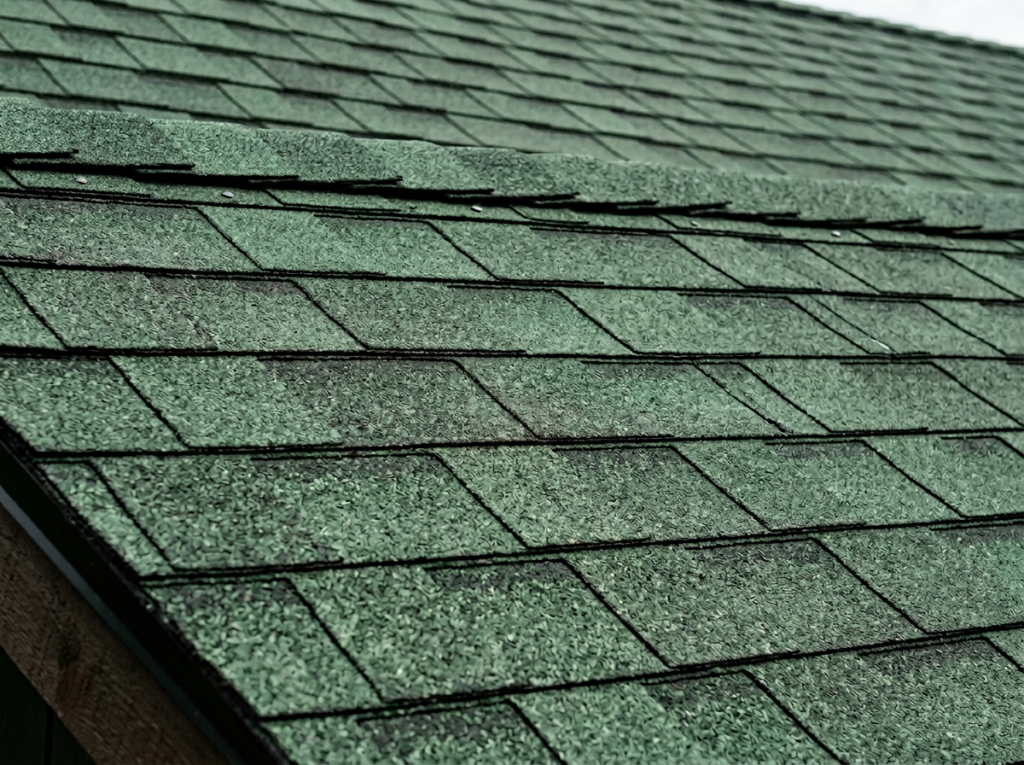
How Ice Dams Form: The Science Behind the Problem
Ice dam formation follows a consistent pattern that explains why addressing the attic is the key to permanent prevention:
- • Heat escapes from living spaces into the attic — Through gaps around plumbing penetrations, recessed light fixtures, attic hatches, and other air leakage points, warm air rises into the attic and warms the roof deck from below.
- • The warm deck melts snow above insulated areas — Snow on the central roof surface melts even during below-freezing outdoor temperatures because the deck below is warmer than ambient air.
- • Meltwater runs toward the cold eave — Water flows down the roof slope toward the eave, where there is no living space heat below and the deck temperature drops to match outdoor air temperature.
- • Water refreezes at the eave, building a dam — The ice ridge grows with each melt-freeze cycle. Eventually the dam backs water up several feet above the eave.
- • Backed-up water forces under shingles — Water held against the roof by the ice dam wicks backward under shingles, through nail holes and seams in the underlayment, into the decking and framing below, and eventually into ceilings and walls.
Warning Signs of Ice Dam Problems in St. Joseph
- • Large icicles hanging from gutters and eave edges — especially those longer than six inches or accompanied by water dripping during below-freezing temperatures
- • A continuous ridge of ice visible at the eave line
- • Water stains appearing on ceilings or interior walls near exterior walls during or after cold spells
- • Peeling paint or bubbling wallboard on interior walls adjacent to the eave area
- • Moisture, staining, or mold visible on the underside of roof sheathing near the eave when viewed from the attic
- • Gutters pulling away from the fascia under the weight of accumulated ice
📞 Winter Emergency Line — 24/7: (816) 269-7874
Safe Ice Dam Removal Methods
When ice dams have already formed and water is entering your home, temporary removal can stop active damage while long-term solutions are planned. Here are the approaches that are safe and effective versus those that cause additional damage:
Safe Methods
- • Calcium chloride ice melt in nylon stockings — Fill a nylon stocking with calcium chloride ice melt (not rock salt, which damages roofing and vegetation) and lay it vertically across the ice dam perpendicular to the eave. The calcium chloride melts a channel through the dam, allowing backed-up water to drain. This is the most commonly recommended homeowner-accessible method.
- • Roof rake snow removal — After each significant snowfall, using a long-handled roof rake to clear snow from the lower three to four feet of the roof eliminates the source material for ice dam formation. This is the most effective short-term prevention measure homeowners can perform safely from the ground.
- • Professional steam removal — The safest and most effective method for removing established ice dams. Roofing contractors with steam equipment can melt ice dams without damaging shingles, gutters, or the roof structure below. This is the method we use when active ice dam removal is needed on St. Joseph properties.
Methods That Cause Additional Damage
- • Chipping or chopping with tools — Using ice picks, axes, or hammers to chip ice from the roof surface almost always damages shingles and gutters. Never chip at an ice dam — you will create more damage than the dam itself.
- • Rock salt or sodium chloride — Rock salt damages asphalt shingles, corrodes gutters and downspouts, and kills landscaping plants beneath the eave. Always use calcium chloride instead.
- • High-pressure water hoses — Directing high-pressure water at an ice dam on a freezing roof creates new icing conditions and can force water under shingles. Not recommended.
Permanent Ice Dam Prevention: Addressing the Root Cause
True long-term ice dam prevention requires addressing the three factors the National Weather Service identifies as critical: air sealing, insulation, and ventilation. None of these alone is sufficient — all three work together to keep the roof deck uniformly cold and eliminate the temperature differential that drives ice dam formation.
- • Air sealing — Sealing all penetrations between living space and the attic is the single most impactful step. Common air leakage points in St. Joseph older homes include gaps around plumbing vent stacks, wiring penetrations, recessed light fixtures, attic hatches, and chimney surrounds. Foam sealant and caulk applied at these locations dramatically reduce the warm air reaching the roof deck.
- • Attic insulation — The University of Missouri Extension recommends R-38 to R-49 insulation in attics for Missouri climates. Homes with older, thinner insulation allow significantly more heat transfer to the roof deck. Upgrading attic insulation is one of the most cost-effective home improvements in the St. Joseph climate, providing both ice dam prevention and year-round energy savings.
- • Attic ventilation — Proper airflow from soffit vents to ridge vents keeps the roof deck cold in winter by flushing heat before it can warm the deck. A minimum of one square foot of net free vent area for every 150 square feet of attic floor area is the standard requirement. Blocked soffit vents — common in St. Joseph older homes where insulation has been pushed over the eave — eliminate this cooling airflow completely.
Our team assesses attic insulation and ventilation conditions as part of every free roof inspection. When we identify ice dam vulnerabilities, we explain the specific corrective steps needed for your home. Learn more about our roof inspection and assessment services.
Ice Dam Damage Repair After Winter
After winter ends, homes that experienced ice dam infiltration often need assessment for water damage to underlayment, decking, insulation, and interior surfaces. Our spring roof inspections identify all ice-dam-related damage and provide a clear repair plan. We also install ice-and-water shield membrane at vulnerable eave areas during roof replacement projects — this self-adhering waterproof membrane provides backup protection against water infiltration even when ice dams form above it. See our full roofing services for St. Joseph.
Frequently Asked Questions: Ice Dam Removal in St. Joseph
What causes ice dams in St. Joseph?
Warm air from living spaces heating the central roof deck while the eave stays cold. Snow melts on the warm central roof and refreezes at the cold eave. The root causes are inadequate attic insulation, air leaks between living space and attic, and insufficient soffit-to-ridge ventilation.
Is it safe to remove ice dams myself?
Calcium chloride in a nylon stocking placed across the dam is the safest homeowner method. Roof raking to clear snow from the lower eave area is also safe from the ground. Never chip ice with tools, use rock salt, or access a frozen roof without professional safety equipment.
Will ice dams damage my roof?
Yes. Backed-up water infiltrates under shingles, through underlayment, into decking, and into interior ceilings and walls. Repeated ice dam events cause progressive decay of roof decking, rafters, and insulation — plus interior ceiling and wall damage.
How do I permanently prevent ice dams?
Three steps: seal all air leaks between living space and attic, upgrade attic insulation to R-38 to R-49, and ensure balanced soffit-to-ridge ventilation. These keep the roof deck uniformly cold, eliminating the freeze-thaw cycle that creates ice dams.
Does Peak 2 Peak assess ice dam vulnerability?
Yes. We assess attic insulation, ventilation, and air sealing as part of every free inspection. We are available 24/7 for winter emergencies when active ice dam water infiltration is occurring.
Ice Dam Resources
- • University of Missouri Extension: Ice Dams – Missouri-specific guidance on ice dam causes, prevention, and removal from MU Extension.
- • National Weather Service: Preventing Roof Ice Dams – Federal guidance on ice dam prevention including insulation and ventilation recommendations.
- • U.S. Department of Energy – Attic Insulation – Research and guidance on attic insulation R-values for Missouri’s climate zone.
- • Wikipedia: Ice Dam (Roof) – Scientific background on ice dam formation physics and the damage they cause to residential roofing systems.
Key Takeaways
- • Ice dams are primarily an attic problem — caused by warm air heating the roof deck unevenly, not simply by cold weather.
- • Permanent prevention requires air sealing, adequate insulation (R-38 to R-49), and proper soffit-to-ridge ventilation.
- • Safe removal uses calcium chloride in nylon stockings or professional steam — never chipping, rock salt, or high-pressure water.
- • Peak 2 Peak assesses ice dam vulnerability during free inspections and provides 24/7 emergency response for active winter water infiltration throughout St. Joseph and all northwest Missouri communities.
- • Ice-and-water shield membrane installation at eave areas during roof replacement provides backup waterproofing protection against ice dam infiltration.
Ice dams are preventable with the right attic improvements, and their damage is stoppable with the right response. Call Peak 2 Peak Roofing today for your free inspection and honest assessment of your home’s ice dam vulnerability — before next winter arrives.
Peak 2 Peak Roofing and Construction
7000 MO-371
St. Joseph, MO 64504
Phone: (816) 269-7874
Email: [email protected]
Website: www.peak2peakroofing.com
View Our Google Business Profile