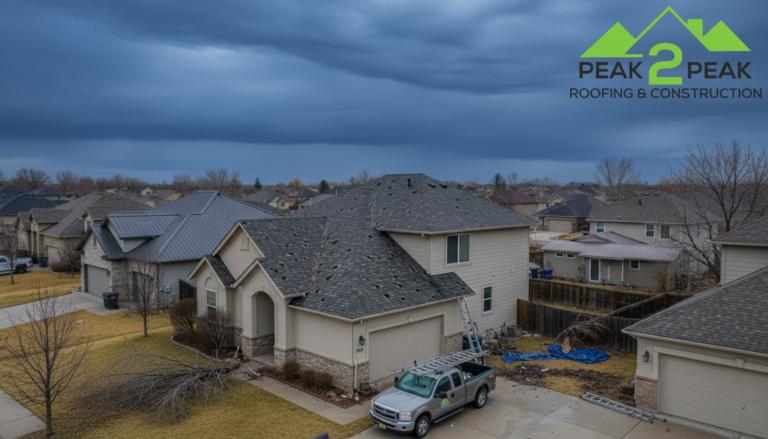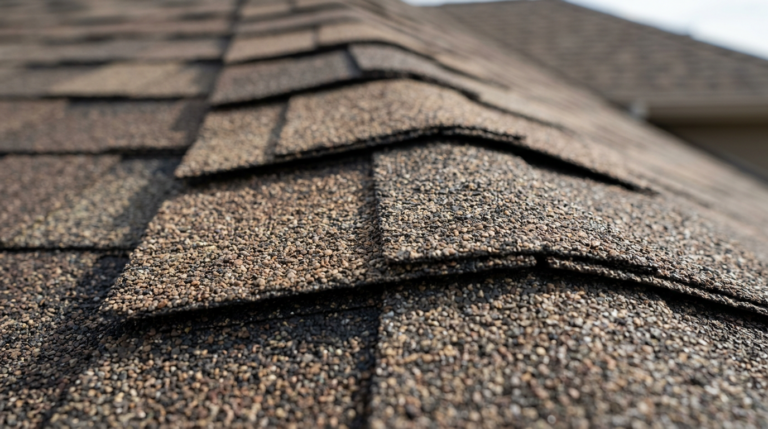
Are you looking for TPO roofing installation in St. Joseph, Missouri? Peak 2 Peak Roofing and Construction installs thermoplastic polyolefin (TPO) roofing membrane systems for commercial and low-slope residential properties throughout St. Joseph and all surrounding communities in northwest Missouri and northeast Kansas. We serve all of Buchanan County and reach Cameron, Savannah, Platte City, Weston, Lathrop, Smithville, Maryville, DeKalb, King City, and Atchison, Kansas. Our free commercial roof inspections and written estimates help St. Joseph property owners and managers make confident decisions about their flat and low-slope roofing systems.
TPO roofing membrane is the dominant flat roof system for commercial properties throughout northwest Missouri, and for well-documented reasons. It delivers an outstanding combination of UV resistance, energy efficiency, seam strength, and cost-effectiveness that makes it the first choice for the churches, retail buildings, office properties, industrial facilities, and multi-family structures that make up St. Joseph’s commercial roofing landscape. White TPO membranes reflect a significant portion of incoming solar radiation, reducing cooling loads for buildings with large flat roof areas during Missouri’s demanding summer heat season. Properly installed TPO systems regularly achieve service lives of 20 to 30 years in midwest climates.
St. Joseph’s commercial roofing market spans a wide range of property types and building ages. The commercial corridor along Belt Highway and South 169, the industrial properties near the Missouri River, the churches and institutional buildings throughout downtown and the historic districts, and the retail developments in the expanding south St. Joseph corridor all rely on flat and low-slope roofing systems that face specific performance demands. Our team understands the local market, the building types, and the climate-specific challenges that TPO roofing in northwest Missouri must address.
What Is TPO Roofing?
TPO stands for thermoplastic polyolefin. It is a single-ply roofing membrane manufactured in large rolls and installed across flat and low-slope roof surfaces. TPO membranes are composed of a polypropylene and ethylene-propylene rubber base compound reinforced with a polyester scrim for dimensional stability. The membrane is typically 45, 60, or 80 mils in thickness — with thicker membranes offering greater puncture resistance and longer service life.
The defining characteristic of TPO is its heat-weldable seam system. Seams between membrane sheets are joined using a hot-air welder that fuses the overlapping membrane surfaces into a molecular bond stronger than the base membrane itself. A properly welded TPO seam will not peel, separate, or admit water under normal conditions for the life of the membrane. This seam strength is what separates TPO from older membrane systems that relied on adhesive or tape-based seaming methods prone to delamination over time.
TPO is available in several colors, with white and light gray being the most common choices for energy-efficiency reasons. Dark gray and tan options are available when reflectivity is less of a priority than aesthetics.
Benefits of TPO Roofing for St. Joseph Commercial Properties
- Energy efficiency — White TPO membranes reflect 70 to 80 percent of incident solar radiation. For large commercial buildings in St. Joseph with significant roof area, this reflectivity translates into meaningful HVAC cost reductions during Missouri’s summer cooling season. Energy Star-rated TPO products meet federal reflectivity and emissivity standards for cool roof performance.
- Exceptional seam strength — Heat-welded TPO seams are routinely stronger than the membrane itself. The seam is the most critical performance point of any single-ply roofing system, and TPO’s weld-based seaming method is the most reliable available.
- UV resistance — TPO is inherently resistant to ultraviolet degradation. Unlike some older membrane types that become brittle with UV exposure, TPO maintains flexibility and performance throughout its service life.
- Chemical resistance — TPO resists a broad range of chemicals including oils, fats, and biological materials. This makes it suitable for restaurant rooftops, food processing facilities, and other commercial applications where airborne chemical exposure is a concern.
- Flexibility in cold temperatures — TPO membranes maintain flexibility at low temperatures, resisting the cracking and splitting that can affect stiffer membrane types during northwest Missouri’s winter cold snaps.
- Cost effectiveness — TPO provides premium performance at a competitive cost point relative to alternative single-ply systems, making it the value-leader choice for most commercial flat roof applications in St. Joseph.
- Environmental profile — TPO is a chlorine-free membrane that does not produce chlorinated byproducts during manufacturing. It is more environmentally favorable than older PVC membrane formulations from a manufacturing standpoint.
📞 Schedule Your Free Commercial Roof Consultation: (816) 752-4589
TPO Installation Methods: Mechanically Attached, Fully Adhered, and Ballasted
TPO membranes can be installed using three primary methods, each appropriate for different substrate types, building structures, and performance requirements:
- Mechanically attached — The membrane is fastened to the roof deck using screws and plates at specified spacing intervals. Seams overlap the fastening rows and are heat-welded. This is the most common installation method for commercial properties in St. Joseph. It is faster to install, more wind-resistant than ballasted systems, and appropriate for most commercial deck types including steel, concrete, and wood.
- Fully adhered — The membrane is bonded to the substrate using bonding adhesive across the full membrane surface. Provides the highest wind uplift resistance and is the preferred method for buildings with complex rooflines, penetrations, or where membrane movement must be minimized. Higher material and labor cost than mechanically attached.
- Ballasted — The membrane is loose-laid over the substrate and held in place by river rock or paver ballast. The simplest and lowest-cost installation method, but requires adequate structural load capacity for the ballast weight. Less common for new commercial construction in St. Joseph but used in specific retrofit applications.
TPO Membrane Thickness: Choosing the Right Mil
TPO membranes are available in 45, 60, and 80 mil thicknesses. For commercial properties in St. Joseph, we recommend 60 mil as the baseline for most applications. Here is why thickness matters:
- 45 mil — Minimum thickness for commercial applications. Appropriate for lower-traffic roofs with few penetrations. Shorter effective service life due to less material depth at seam areas and puncture-prone locations.
- 60 mil — The industry standard for most commercial applications. Provides a good balance of cost, puncture resistance, and service life. Our standard recommendation for the majority of St. Joseph commercial roofing projects.
- 80 mil — Premium thickness for high-traffic roofs, rooftop mechanical equipment areas, and properties seeking maximum membrane durability. Higher upfront cost with extended effective service life.
Our TPO Roofing Installation Process in St. Joseph
- Free commercial roof inspection — We assess the existing roof system, deck condition, drainage, penetrations, and overall system health. We provide a clear written report and honest recommendation.
- Substrate preparation — Existing membrane and insulation are removed as needed. Deck repairs are completed before new materials are applied. For recover projects, we assess whether the existing system provides an adequate substrate for new membrane installation per NRCA guidelines.
- Insulation installation — New polyisocyanurate (polyiso) or extruded polystyrene (XPS) insulation boards are installed to achieve the required R-value and create a smooth, consistent substrate for the membrane.
- Membrane installation — TPO membrane rolls are positioned, attached using the appropriate method for the project, and indexed for seam alignment.
- Heat-welding — All seams are welded using calibrated hot-air welding equipment. Seam quality is verified with probe testing after welding. No membrane seam is left incomplete or unverified.
- Detail work — All penetrations, drains, curbs, edges, and transitions receive custom-fabricated TPO flashings and termination bar attachment per manufacturer specifications.
- Final inspection — We inspect every seam, every penetration, and every detail before the project is declared complete. Our commercial inspection reporting provides documentation of completed work.
Serving St. Joseph Commercial Properties
Our TPO roofing installation and repair service covers the full range of commercial property types in St. Joseph and surrounding communities. We have experience with churches, retail buildings, office properties, industrial warehouses, multi-family residential buildings, and institutional structures throughout Buchanan County. See our full roofing services for St. Joseph.
Frequently Asked Questions: TPO Roofing in St. Joseph
How long does TPO roofing last in St. Joseph, Missouri?
A properly installed 60 mil TPO system in St. Joseph typically lasts 20 to 30 years. Thicker 80 mil membranes extend toward the upper range. Regular annual inspections and prompt damage repair extend TPO service life significantly.
What is the difference between TPO and EPDM roofing?
TPO is a white thermoplastic membrane with heat-welded seams, offering superior energy efficiency and seam strength. EPDM is a black rubber membrane with adhesive seams and a longer track record. Both are appropriate for St. Joseph flat roofing depending on the specific application.
What TPO thickness should I choose?
60 mil provides the best cost-performance balance for most St. Joseph commercial buildings. High-traffic roofs and rooftop equipment areas benefit from 80 mil. We recommend the right thickness for your building during the free inspection.
Does Peak 2 Peak install TPO roofing in St. Joseph?
Yes. We install TPO systems for commercial and low-slope residential properties throughout St. Joseph and all surrounding northwest Missouri and northeast Kansas communities. Free inspections and detailed estimates available.
How do I know if my commercial roof needs TPO replacement or repair?
Signs include open seams, membrane tears or punctures, persistent ponding water after rain, membrane shrinkage at the perimeter, and interior water stains. Our free commercial inspection identifies all failure points and gives an honest recommendation.
TPO Roofing Resources
- National Roofing Contractors Association (NRCA) – Professional standards and guidelines for TPO single-ply roofing installation and inspection.
- Single Ply Roofing Industry (SPRI) – Industry standards body for single-ply roofing systems including TPO membranes.
- Wikipedia: Thermoplastic Polyolefin (TPO) – Background on TPO composition, properties, and roofing applications.
- Energy Star – Cool Roof Products – Database of Energy Star rated cool roofing products including reflective TPO membranes.
Key Takeaways
- TPO is the leading commercial flat roofing system in St. Joseph, offering excellent UV resistance, energy efficiency, and heat-welded seam strength.
- 60 mil is the industry-standard thickness for most commercial applications; 80 mil is recommended for high-traffic and demanding applications.
- Heat-welded seams are stronger than the membrane itself — the defining performance advantage of TPO over older adhesive-seamed systems.
- White TPO membranes reduce solar heat gain significantly, lowering HVAC costs for St. Joseph commercial buildings during Missouri’s hot summers.
- Peak 2 Peak provides free commercial roof inspections and TPO installation throughout St. Joseph and all surrounding northwest Missouri communities.
Your St. Joseph commercial building deserves a flat roofing system that performs reliably for 20 to 30 years. Call Peak 2 Peak Roofing today for your free commercial roof inspection and find out whether TPO is the right solution for your property.
Peak 2 Peak Roofing and Construction
7000 MO-371
St. Joseph, MO 64504
Phone: (816) 752-4589
Email: [email protected]
Website: www.peak2peakroofing.com
View Our Google Business Profile